
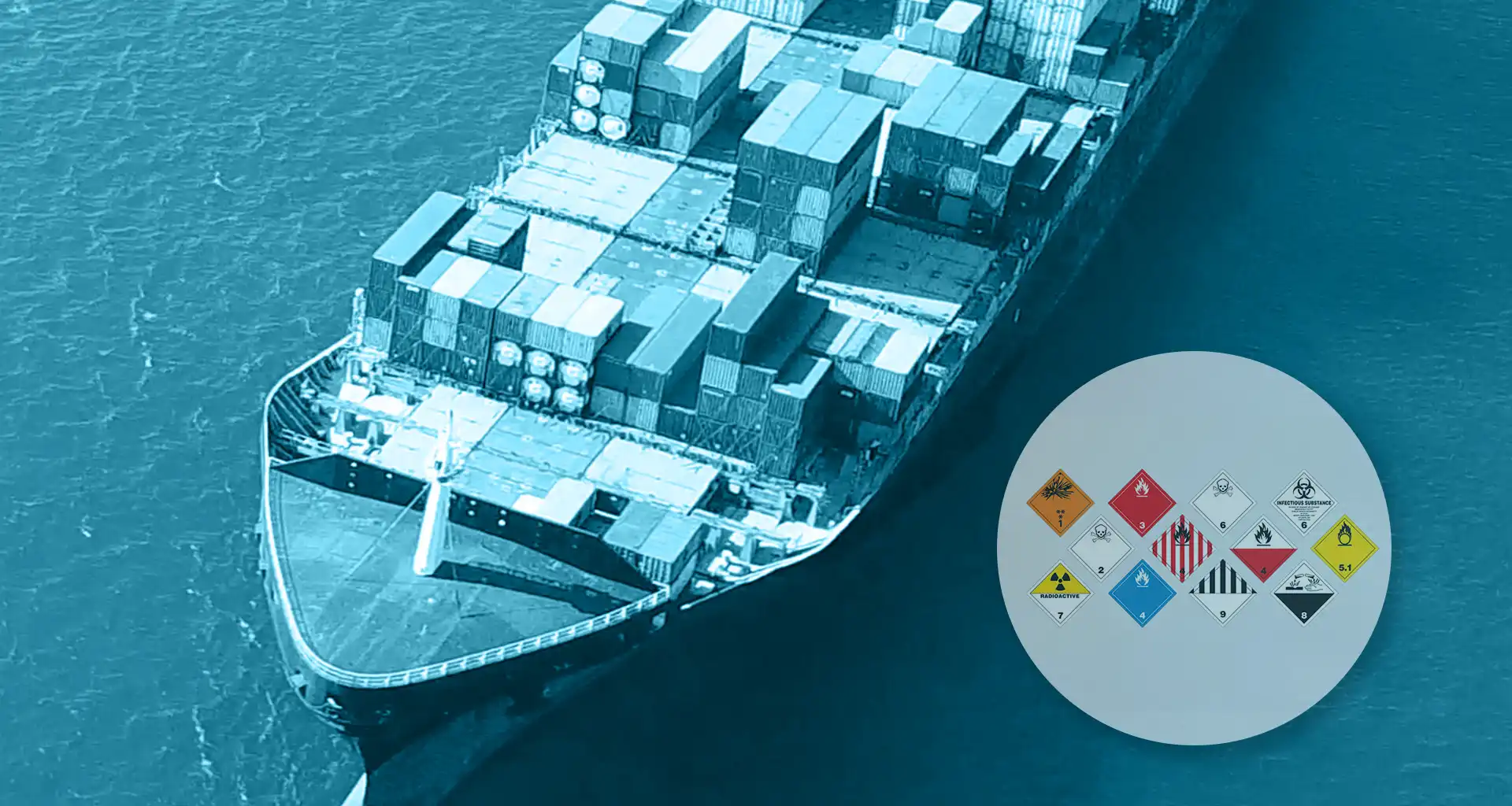
The IMDG Code, also known as the International Maritime Dangerous Goods Code, is a global standard that regulates the transport of hazardous goods by sea.
Every year, millions of containers carrying chemicals, flammable products, and other dangerous substances move across oceans. Even a small mistake in packaging or labeling can put crew members, port workers, and the environment at risk. To avoid such incidents, the International Maritime Organization (IMO) created clear classifications and handling rules that shipping companies must follow.
This is important because safe maritime transport not only protects lives but also ensures that international trade runs without disruption. Ports and coastal communities also benefit from reduced environmental hazards when dangerous goods are managed correctly.
In this guide, you’ll learn how the IMDG Code defines dangerous goods, what labeling and documentation are required, and which responsibilities fall on shippers, carriers, and authorities. The goal is to give you practical knowledge that helps in real-world operations and improves overall compliance.
Let’s explore how the IMDG Code keeps global shipping safe, efficient, and reliable.
Table of Contents
What is the IMDG Code?
The International Maritime Dangerous Goods (IMDG) Code is a global rulebook that explains how dangerous goods should be packed, labeled, handled, and shipped by sea. Its main goal is to keep people safe, protect the marine environment, and make sure cargo can move smoothly across international waters.
This code is maintained by the International Maritime Organization (IMO), which works under the United Nations to set safe transport standards. The rules inside the IMDG Code follow the UN Model Regulations, a common framework that applies to all modes of transport—whether by air, road, rail, or sea.
The IMDG Code gives step-by-step safety guidance on how dangerous goods should be classified, identified, documented, and secured during transport. It also covers essential details like packaging, marking, labeling, and staff training, so that shipments remain compliant and risks are reduced.
By following the IMDG Code, shipping companies and logistics providers can ensure that dangerous goods are moved safely without harming people, ships, or the environment.
What information is inside the IMDG Code?
- Packing
The IMDG Code highlights how dangerous goods must be packed securely. Proper packing keeps items stable during transit and reduces the chance of leaks, spills, or accidents. - Container Traffic
It sets out clear rules for how hazardous cargo should move in containers. These rules help maintain safety from the loading point to the final delivery location. - Stowage
The code explains how and where goods should be placed on a ship. Organized stowage is essential to balance the vessel and protect cargo from damage. - Segregation
It provides guidance on keeping certain substances apart. By separating incompatible materials, the risk of dangerous chemical reactions is greatly reduced. - Emergency Preparedness
The IMDG Code prepares crews with clear steps to handle emergencies. Having these measures in place ensures quick action in case of fire, spill, or other incidents.
What are the different IMDG Code classes?
- Class 1: Explosives
This class covers materials that can detonate or combust rapidly. Examples include fireworks, ammunition, and dynamite. The main risk is sudden explosions, which can cause fire, shockwaves, and flying fragments. - Class 2: Gases
Gases may be compressed, liquefied, or dissolved under pressure. They can be flammable, toxic, or corrosive, such as propane, chlorine, or ammonia. The hazards include fire, poisoning, and damage to containers or equipment. - Class 3: Flammable Liquids
This class includes liquids like gasoline, alcohol, and acetone that ignite easily at normal temperatures. The primary risk is fire, making proper packaging and handling essential during transport. - Class 4: Flammable Solids
These are materials that can catch fire quickly or generate heat on their own. Matches, sulfur, and some metal powders fall into this class. Hazards include intense flames and spontaneous ignition. - Class 5: Oxidizing Substances and Organic Peroxides
These substances may not burn themselves but can intensify fires or react dangerously. Examples include hydrogen peroxide and potassium nitrate. Risks involve explosions and severe reactions when in contact with other materials. - Class 6: Toxic and Infectious Substances
This class covers poisons and infectious materials like pesticides, arsenic compounds, and medical waste. The main concern is harm to human health through poisoning or contamination. - Class 7: Radioactive Materials
Radioactive substances such as uranium, plutonium, and isotopes used in medicine fall into this class. They pose risks of radiation exposure, which can be harmful to both people and the environment. - Class 8: Corrosive Substances
These include strong acids and bases such as sulfuric acid or sodium hydroxide. They can cause severe burns to skin, damage materials, and corrode containers if not handled correctly. - Class 9: Miscellaneous Dangerous Goods
This class covers hazardous items that do not fit into other categories, such as lithium batteries, dry ice, or asbestos. The risks vary depending on the material, but each requires careful handling and clear labeling.
Why is the IMDG Code important?
- Understanding Dangerous Goods
The IMDG Code ensures seafarers can correctly identify dangerous goods using proper shipping names. Knowing what the cargo is helps prevent mistakes during handling, storage, and transport. - Segregation of Cargo
Dangerous goods must be separated based on their chemical nature. The IMDG Code guides crew members on how to segregate cargo safely so that incompatible substances are never stored together. - Safe Packing of Goods
Packing plays a vital role in avoiding leaks or accidents. The Code explains how different types of IMDG cargo should be packed to ensure safety at sea and during port handling. - Markings and Labels
Every package of dangerous goods needs correct markings, labels, or placards. These symbols provide quick hazard identification, making it easier for crew and port authorities to take proper precautions. - Awareness of Hazards
Seafarers must know the risks linked with each class of dangerous goods. This awareness helps them follow safe practices while loading, unloading, or securing cargo on board. - Transport Documents
The IMDG Code highlights the importance of accurate transport documents. These records guide handling, support inspections, and ensure compliance with port and transit regulations. - Handling During Voyage
Crew must be prepared to deal with dangerous goods while the vessel is at sea. The Code outlines safe methods for monitoring cargo, preventing leaks, and responding to emergencies during the voyage. - Survey and Inspection
Inspectors may carry out surveys to confirm compliance with international rules. The IMDG Code helps seafarers understand what inspectors look for and how to maintain readiness. - Fire Safety Measures
Knowing the right procedure to contain and fight fires involving dangerous goods is critical. The Code provides step-by-step guidance for tackling emergencies inside cargo holds or containers. - Stowage and Stability
Hazardous goods must be stowed considering ship stability, safety, and emergency preparedness. The IMDG Code helps crew plan stowage to keep the vessel balanced and secure. - Accurate Declarations
A correct declaration of dangerous goods is necessary for port authorities and land transport agencies. This ensures smooth operations, reduces delays, and enhances overall safety.
Conclusion
The IMDG Code plays a vital role in keeping the transport of dangerous goods by sea safe and reliable. It sets out clear rules that reduce risks, protect marine life, and make international trade smoother. Following these guidelines helps avoid accidents, safeguard crews, and limit environmental damage. As shipping continues to evolve, the IMDG Code adapts to meet new challenges, ensuring global safety standards remain strong.